Rotating Ventilation cowls


Rotary Ventilation Deflectors (Turbo Deflectors)
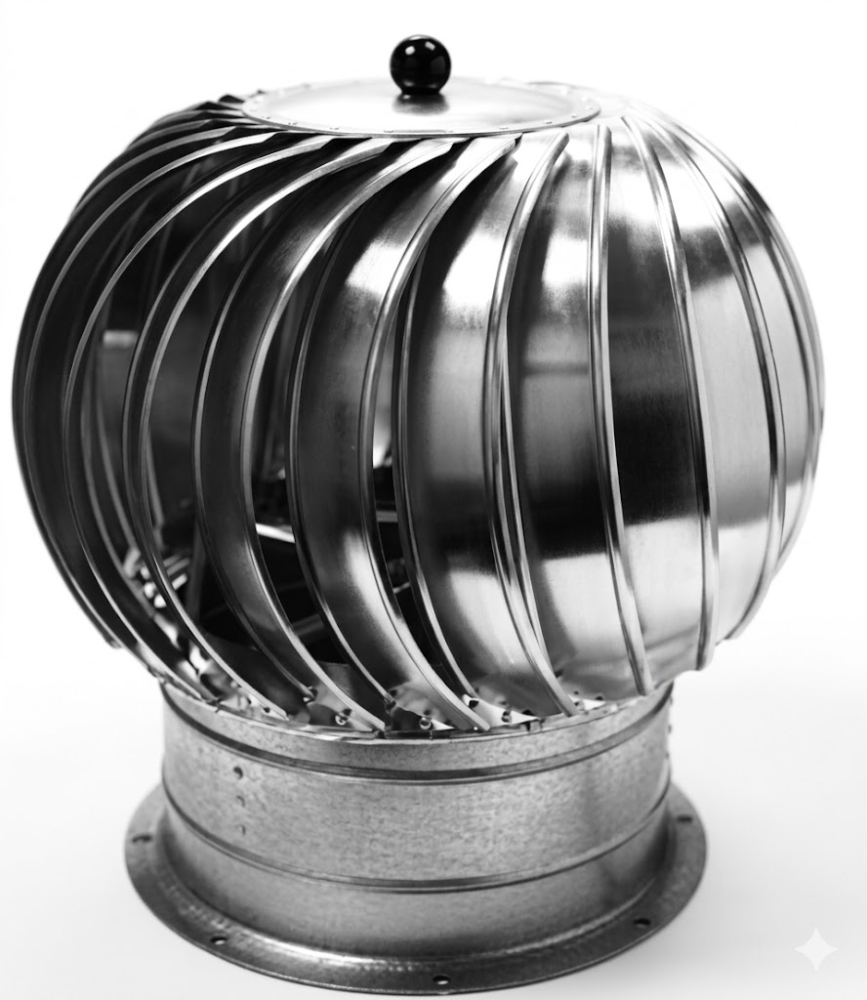
A rotary ventilation deflector (turbo deflector), also referred to as a rotary vent cowl, is a mechanical device that uses wind energy to create and stabilize natural draft in exhaust ventilation ducts. Unlike standard static cowls, it rotates continuously, creating a vacuum zone and actively extracting exhaust air from the premises.
Our range includes models with mounting diameters from 150 to 500 mm, allowing you to find the optimal solution for both private homes and large residential or industrial facilities. Important: ventilation turbo deflectors are designed exclusively for ventilation systems. Their installation on stove or boiler chimneys is not permitted, as the mechanisms are not designed for the high temperatures of flue gases.
What to consider before buying
To correctly select a turbo deflector, we recommend checking the following parameters of your ventilation system:
- Diameter and connection type: Ensure that the mounting size of the deflector (from Ø150 to Ø500) matches your pipe. There are models with a socket (mounted over the pipe), a flange (for bolted connection), and a flat rectangular or square base (for brick shafts).
- Turbine shape: Classic spherical models are suitable for most standalone outlets. If ventilation ducts are located close to each other, it is better to choose a cylindrical deflector due to its smaller rotation radius.
- Material: Combined options (aluminum and galvanized steel) and models made entirely of stainless steel are available.
- Maintenance access: The design of many models with a base or adapter allows you to easily remove the upper turbine part to inspect the ventilation duct.
Operating principle and benefits
The operating principle is based on converting horizontal wind flow into the rotational movement of the turbine. The resulting centrifugal forces form a stable vacuum in the ventilation duct. This provides several important benefits:
- Draft enhancement: Actively extracts humid and exhaust air, improving the indoor climate.
- Protection against backdraft: The rotating head acts as a barrier, preventing wind from blowing back into the room.
- Energy independence: The device operates completely autonomously using wind power, requiring no electrical connection.
- Duct protection: The blade design securely covers the ventilation shaft, preventing the ingress of rain, snow, leaves, and birds.
Overview of designs
Ventilation turbo deflectors are classified by two independent parameters: the shape of the rotating turbine and the type of mounting base. This allows you to choose the optimal device for specific technical installation conditions.
By turbine shape
Spherical turbo deflectors
Classic shape ensuring high device performance. It is the standard for most standalone ventilation outlets on the roof.
Cylindrical turbo deflectors
Feature a compact design and a reduced rotation radius. Designed for in-line installation on multi-duct shafts where ventilation outlets are located close to each other.
By connection type
Socket connection (without base)
Mounted directly onto a round ventilation pipe of the corresponding diameter with fixation using side nuts. Installation should be entrusted to a specialist.
Flat base
Equipped with a square or rectangular mounting base. Designed for mounting on flat surfaces, brick ventilation shafts, or flat ducts.
Flange connection
Designed for large diameter ventilation systems (from Ø300 to Ø500 mm). Provides a rigid bolted connection to the corresponding pipe flange, resistant to strong wind loads.
Adapter for ceramic pipes
Comes with a special mounting adapter, the lower part of which is installed inside a thick-walled ceramic pipe. The outer skirt covers the mounting gap and protects the structure from precipitation.
Material selection
The durability and weight of the structure directly depend on the materials used. All turbo deflectors in our catalog are divided into two main groups:
| Material | Features and design | Application |
|---|---|---|
| Aluminum + Galvanized steel | Combined design. The turbine head is made of aluminum (0.5 mm), which provides minimal weight and an easy start of rotation. The mounting part (base, socket, or flange) is made of durable galvanized steel. | Universal and affordable option for most domestic ventilation systems with normal operating conditions. |
| Stainless steel | The entire deflector (both the turbine and the mounting unit) is made of 0.6 mm thick stainless steel. | Increased strength and maximum corrosion resistance. Ideal for objects with high requirements for durability and reliability. |
Installation principles
Proper installation of a rotary deflector is the key to its long and silent operation:
- Strictly vertical axis: The deflector must be installed perfectly straight. Tilting can lead to uneven bearing wear and noise.
- Secure fastening: The device must be firmly fixed on the pipe or shaft to withstand wind gusts.
- Clear space: Ensure there are no obstacles (antennas, wires, roof elements) around the turbine that would hinder its free rotation.
CE certification and compliance with standards
All ventilation components supplied by Akvilon carry the CE mark, confirming their full compliance with applicable European quality and safety standards.