Rotary Chimney Cowls


Rotary Chimney Cowls
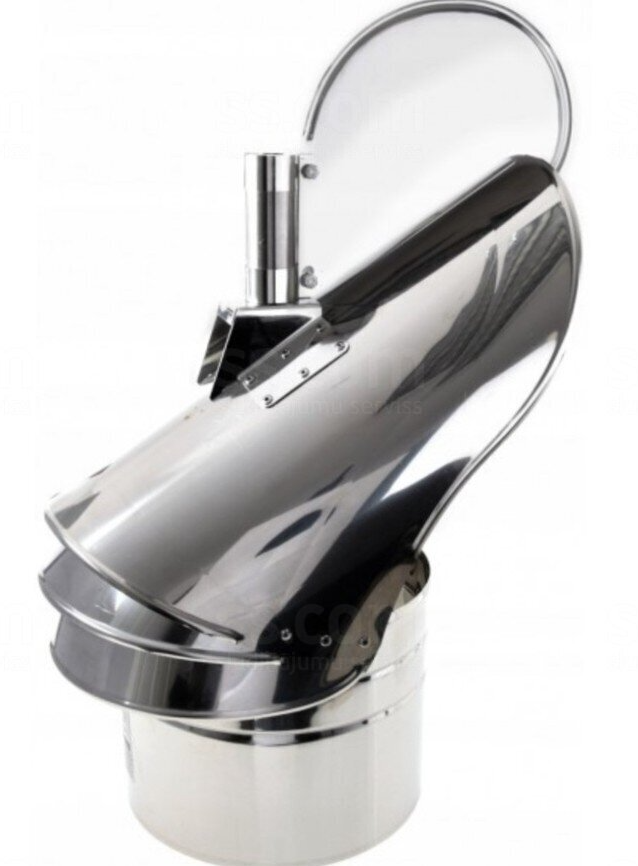
A rotary chimney cowl (turbo deflector) is a mechanical device that uses wind energy to actively create and stabilize draft in the chimney flue. Unlike standard chimney caps, it doesn't just protect the pipe, but constantly rotates, creating a vacuum zone and forcibly extracting exhaust gases.
The key difference between a chimney model and a ventilation model is the use of heat-resistant bearings and special steel. Installing a conventional ventilation turbo deflector on a chimney is unacceptable and will lead to its rapid destruction.
What to consider before buying
To ensure the cowl works efficiently for a long time, we recommend checking the following parameters before purchasing:
- Exact diameter match: The mounting size of the cowl must match the diameter of your chimney pipe.
- Metal thickness: For standard conditions, 0.6 mm steel is sufficient. For systems with high exhaust gas temperatures (sauna stoves, solid fuel boilers), consider metal thicknesses from 1.0 to 2.0 mm.
- Aerodynamic shape: For open areas with strong or gusty winds, models with a guiding vane are well suited.
- Bearing design: Ensure the rotation mechanism is equipped with closed, heat-resistant bearings. Models with an external bearing last longer, as they are securely isolated from soot and high temperatures.
- Access for cleaning: The design should allow the turbine to be easily removed for regular chimney maintenance.
Operating principle and advantages
The operating principle is based on converting the horizontal wind flow into the rotary motion of the turbine. The centrifugal forces created form a stable vacuum at the chimney mouth, actively extracting combustion products. This provides a number of important advantages for heating systems:
- Stable draft in any weather: Effective in light and gusty winds, guaranteeing reliable ignition of the boiler or fireplace and preventing smoke from entering the room.
- Protection against downdraft: The rotating head acts as a barrier to wind blockage, eliminating the effect of draft inversion (when smoke starts flowing back into the room).
- Increased efficiency: A stable draft promotes more complete fuel combustion.
- Reliable weather protection: The turbine design protects the chimney flue from rain and snow even during rotation.
Models overview
Rotary chimney cowls are produced in several structural designs, each of which has its own features.
Spherical turbo deflector
A classic and common model. Provides stable draft in most conditions. To protect the mechanism from aggressive condensation, it can be equipped with an external bearing assembly.
Cowl with a vane
Equipped with a swivel mechanism, so it always turns its «back» to the wind. This design provides maximum protection against wind blockage and is usually equipped with an isolated external bearing.
Decorative cowls
Combine the function of a chimney cap and an aesthetic roof element (e.g., weather vanes in the shape of a rooster).
Material selection: stainless or black steel
The durability of the device directly depends on the material, which is selected based on the type of your heating appliance.
| Material | Key feature | Recommended application |
|---|---|---|
| Stainless steel (0.6 — 1.0 mm) | Resistance to corrosion and aggressive chimney environments. | A universal choice for most systems: gas and pellet boilers, solid fuel boilers and fireplaces with moderate exhaust gas temperatures. |
| Black steel (2.0 mm) | Increased thermal stability and protection against deformation. | For sauna stoves, fireplaces, and solid fuel boilers with high exhaust gas temperatures. |
Installation principles
Proper installation of a rotary cowl is the key to its long and efficient operation. When installing, several key principles must be observed:
- Strictly vertical axis: The cowl must be installed vertically. Tilting can lead to improper operation of the bearing assembly.
- Secure mounting: The rotating cowl must be firmly attached to the chimney mouth to withstand wind loads.
- Free space for rotation: Ensure there are no obstacles (antennas, adjacent pipes) around the cowl's turbine that interfere with its free rotation.
CE certification and compliance with standards
All chimney components supplied by Akvilon have the CE mark, confirming their full compliance with the European safety standard EN 1856.